Showing posts with label camera trap. Show all posts

Saturday, July 2, 2016

Paige and the Bears

If there is anyone who knows how to get Northern Virginia's bears on camera, it is Paige.

Mother bear and cub. Photo: Paige Critchley
Paige Critchley contacted me over a year ago about trail camera advice.  At that time,  she was taking on the task of using a trail camera to help a person locate a missing dog in her area.  I forwarded her some tips and told her to keep in contact with me.  What she probably didn't realize then, was that she was at the beginning of a new hobby and an addicting habit called camera trapping (using remote-sensored trail cameras).  It's a very healthy habit, and one that she has become an expert in.

Critchley is a local entrepreneur, a horse enthusiast, and a wildlife lover.  To me, she has also become a great friend and someone who shares the passion of photographing wildlife with trail cameras.  She spends a lot of her free time with her dog outdoors and with friends, but always seems to have trail cameras in the back of her mind.  "Using trail cameras always builds excitement," Critchley says "It's an activity that takes my mind off work."

She volunteered some of her time to run cameras for me in Loudoun County, Virginia and I got to see her interest rise.  Growing with her passion for this, is the number of cameras she personally owns and uses.  It started as one but has grown to 12 cameras now.
Black Bear.  Photo: Paige Critchley

While she describes coyotes as being her favorite animal to capture on camera, Critchley has gotten an incredible amount of bear photographs lately.

Bears aren't rare here in the suburbs of Northern Virginia, but they exist mostly in western Loudoun, parts of Fauquier, and parts of Prince William Counties. During certain times of the year, bear activity may greatly increase in more suburban areas, leading to problems in traffic.  This is due to an interest in new territory and mating habits of young males. With these trail cameras, we are able to keep records on bears and do small population surveys based on the photos.

"I have about 7 or 8 bears coming through 2 different trail camera locations, at the moment." Critchley says.  She adds "I even captured two bears in combat, possibly a mating ritual or territorial fight."

These black bears are not something to be fearful of in our area, but rather something to be aware of. They are omnivorous, meaning that both plants and animals make up their meals. Right now, black bears are feeding on ripened raspberries, wineberries, roots, and insects.  Throughout the year, their diet changes, but usually keeps with a mostly plant based diet, mixed in with a few animals.

Capturing an image of a bear tells a lot.  It can tell researchers where bears are, how many are in a certain area, and daytime patterns of an individual.  Capturing behavior is another thing, and tells a whole story.  The trail cameras have captured the combatting bears, young bears ripping down Critchley's cameras, different bear postures, and even bears stealing her cameras and using them to take their own selfies.
Every time another black bear touches this log, it adds a tiny bit of scent.  The scent draws in more bears and the cycle continues, sometimes for months.  Photo: Paige Critchley.
Critchley's fondness of wildlife doesn't just stop at bears.  In just over a year, she has captured a plethora of images, recording everything from deer to coyotes, and even bobcats.  All of her images are from the Washington D.C. metropolitan area and people are sometimes astounded by the fact that these animals are so close to our Nation's Capital.
A bobcat of Northern Virginia.  Photo: Paige Critchley

Thursday, May 26, 2016

Baby Foxes - Finally!

Not all nature is cute and fluffy, but these fox kits are!

Red foxes (Vulpes vulpes) have some of the most well-loved babies here in Northern Virginia.  Their playfulness captures the hearts of all of us, their big eyes are adored, and watching them becomes an activity, as well as an opportunity for a lot of families in the suburbs.

I had the opportunity to enjoy watching some of these baby foxes with Derek and Liz Smeds this year. They watched them from their house and I watched them from my computer screen, as I placed a trail camera right at the den entrance after they had notified me about the location of the den.

Derek had shared some photos of fox kits playing in the neighbor's yard a week or so before I had a chance to get out to them.  I was hooked immediately when I realized that the foxes were playing there very often and were occupying an old groundhog den.

It was exactly what I was looking for.

I met up with Liz at their house and quickly got in contact with the landowner a few doors down, where the den was.  Permission was granted for us to start a small camera trap survey of the animals. Everyone's excitement showed tremendously.

A camera was set up and we waited patiently for the first photos. In the mean time, Liz and Derek messaged me often about any behavior they were seeing.  They texted me every few days when they'd see them, sometimes explaining how close the foxes were. Liz says "We have always had wildlife in this neighborhood and enjoy seeing it."  I could tell.  The Smeds family was as enthusiastic about this as I was.

To everyone's amazement, the first time the camera was checked was a very successful one.  A lot of footage of the foxes appeared. Again and again, the camera provided phenomenal photos of the local foxes, each time providing better results than the last.

It was awesome!

Like human children, the fox kits played, fought, ate, and pooped a lot. These behaviors are typical of fox babies, and will continue until they turn into adults when a lot of their life is hunting and taking care of their own young.

The images were from only a few weeks ago, and since then, the camera has been removed to start a new project in the area with local beavers.

The foxes will grow up and move on too, patrolling our woods and eating undesired rodents.


I would like to personally thank Derek and Liz Smeds, their neighbors, and the community of Countryside, VA for allowing me to work on this little project.  It is much appreciated!

Thursday, August 27, 2015

"Tank"

Trail cameras are still running heavy in Purcellville and other parts of Western Loudoun by two of my favorite volunteers, Paige and Peter.  We've been getting all sorts of results, though bobcat and coyote activity have seemed to slow down recently out there.

The biggest excitement with the Purcellville cameras has been images of "Tank". He's a white-tailed deer buck that has been growing an impressive set of antlers. Peter named him, of course, and the name is not only fitting, but has stuck well for the past month or so.

Here is "Tank", one of the biggest bucks around this year.   It's hard to tell from this image, but there are (what we think and have seen in other images) 12 points on his antlers.  It'll be interesting to see if Peter is able to hunt this beast this year.


Tank is the closest deer, followed by two other impressive bucks behind him.

Tuesday, April 7, 2015

Fooled and Fooled Again

While a lot of the camera traps that I use are for scientific surveys and owned by parks, nature preserves, and various parks/wildlife agencies, I tend keep a bunch for myself that are owned by me.

These ones are moved often, as they do not fit into a scientific proposal or specific project.  It's a sort of freedom that I really enjoy.  With these though, I like to challenge myself to get really cool stuff coming across the cameras.

This year, I've been all about the fox dens.  Last year's fox kit pictures and blog posts turned out phenomenal and I'm really hoping I can get something similar this year.  It takes a lot of work and time to search for fox dens, but it could prove to be really useful in the end.  Emails and messages have been flying around like crazy and many miles have been walked, in search for the holes made by these small canids.

There always seems to be a bit of a debate as to whether a hole or den site belongs to a fox or a groundhog, and while I've spent the past few years studying them, reading up on them, and tagging along with others in the field with various animal dens, I still have not perfected the art of determining what is a fox den and what is a groundhog den.

The phrase "Brian, you should know this stuff."  commonly pops up into my head, upon visiting each den site.  It's interesting though and makes this sort of fun.

Young groundhog in a "prairie dog" type of stance in Lovettsville, VA.
Don't worry though, I know the "textbook" definition of a fox den and a groundhog den, but that is just what it is.  Generally, groundhog dens are a bit differently shaped than fox dens and dirt may be thrown out of each hole in a different pattern with each species.  They both can be commonly built on berms or small hillsides either in the middle of the woods or in meadows.

To me, the easy way to tell if a fox has been in a den is to put my face near it and take a whiff of the air.  If it smells like fox urine (a pungent smell that is similar to skunk spray), a fox has usually been there.  To make this even more complicated though, is to add the fact that a fox could have been hunting a baby groundhog, co-habitating (living with) the groundhog, or just marking the territory nearby.

I've been fooled with this time after time.  This year has been the epitome of me getting fooled by foxes and groundhogs, and just when I think I've got an active den with fox kits, a groundhog will appear.

It's a bit discouraging, but it's all part of camera trapping.
Resident groundhog from Loudoun County, VA from this past March.

Sunday, March 22, 2015

Technical Difficulties

The best camera trap photo opportunities sometimes seem to vanish with either technical difficulties or "user error".  By "user error", I mean the fact that sometimes I forget to reset cameras or even forget to turn them on at all.  I'm just human.  Mistakes happen.

This little mistake though is one that I cannot figure out yet.  I'm unsure if it is a memory card problem, "me problem", computer problem, or a camera trap problem.  I need to look more into it.

When viewing the images, only a portion of each image shows.  The rest of the picture seems to be sort of blurred out with a single color.  It's odd and I cannot figure it out.

Here are some examples.


Although I find these pictures fascinating and I can add the species to my data tables, they are not exactly the "perfect pictures" that I was hoping for.

That's the way it goes sometimes.  There's always somethin'.

I'm happy with those coyote pictures though.  At least they made it to the blog!

Sunday, February 15, 2015

Bears and Batteries

When the cold sets in like it is right now, most of my camera traps don't work.  This happens for various reasons, but mostly because some kinds of batteries tend to freeze up a bit and the fact the even the camera's internal electronics get frozen if there's a trace of moisture inside of them.

Regardless, they usually kick right back in when there's a bit of a thaw.  For now though, it's just a sort of waiting game until the batteries continue to work again.

In other Northern Virginia wildlife news, there has been a huge increase in the amount of bear related sightings, emails, and inquiries to me in the past two weeks.

Mostly, this has happened in Loudoun County, specifically Potomac Falls, Sterling, Lowes Island, Cascades, and the Great Falls Forest neighborhoods.  So here's a little bear information for everyone.

Whether or not this is the same bear as what people have been asking about, is still a bit of a mystery to me.  Either way, it's exciting to see bears roaming around.

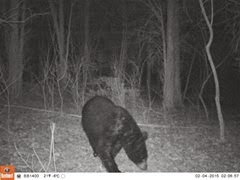
I caught one of them on a camera trap recently.   Take a look!


In typical "bear fashion", it came near the camera, sniffed around, got a bit curious, and went on as usual.  That's what I like to see though.  The bear just seemed to get curious about the camera, my human scent, and whatever I touched.   There was no food put down.  In this way, the bear was never rewarded for just coming by and there was barely (bearly?) any human interaction other than a trail camera being around.   Feeding this bear would not only have been illegal, but also wrong on many levels.   Doing so may have led to unhealthy behaviors and unwanted human/wildlife interactions.

It didn't just leave pictures though.  It left some scat in a very obvious place, and I had to take a picture to send to various naturalists and biologists to identify.

There's no doubt in my mind that this is bear scat.  It's large (over 8 inches long with a large mass), not human-like, seems to contain seed/nuts, and is the biggest piece of s*** that I've seen in this general area in a long time.  I've seen dog, human, coyote, and various other scats around, but nothing really compares to this one in Sterling.


So why is there a dollar bill in the picture?  Well, a dollar bill, in a pinch can act as a sort of ruler or object to compare to.  Other people may use knives, pens, and their shoes, but I like to use dollar bills.  They are almost exactly 6 inches long and when you don't have an actual ruler, they can easily be used as a measuring tool.

Tuesday, January 13, 2015

Camera-Trapping Program

I'll make this one short and sweet!

In March of this year, Loudoun Wildlife Conservancy will be hosting program titled "Wildlife Camera-Trapping Program and Field Trip".

Location:  Morven Park,  Leesburg, Virginia
Date:  March 7, 2015
Time:  2 P.M.
What to bring:  Hiking boots or shoes that can get muddy.

You are all invited come to this FREE program where I will be speaking about local camera-trapping projects, ecology, citizen science, and northern Virginia's natural world.

There will of course be an outdoor field portion of this program.

Did I mention it's FREE?!

You can sign up here :  Wildlife Camera-Trapping Program .

Hope to see you there!

Sunday, January 11, 2015

Northern Virginia Coyotes

If I were to survey an audience of Northern Virginians asking what the most often seen mammals in the area are, white-tailed deer, gray squirrel, and raccoons might be at the top of that list.

Following these, other mammals often seen might be foxes, bats, rats, mice, and groundhogs.

One mammal though, would most likely be at the bottom of this list.  
Large eastern coyote camera-trapped in Great Falls, Virginia.
Photo: Brian Balik/The Nature Conservancy

That is the Eastern Coyote (Canis latrans).

Eastern Coyotes are seldom seen critters.  They lurk around being extremely cautious of their surroundings.  They use our parks as stomping grounds, our creeks as drinking holes, and our stream valleys and golf courses as travel corridors.

I've spent a lot of time in the past few years studying them, tracking them, and surveying them with many camera-traps.  From park naturalist jobs to volunteering for the Smithsonian National Institution, I've seen them in most towns of northern Virginia.

Great Falls, McLean, Langley, Sterling, Reston, Leesburg, Lovettsville, Purcellville, Alexandria, Centreville, Chantilly, Springfield, Manassas, and Burke are all places where I have seen or heard living coyotes, seen them as roadkill, or even caught them on camera-traps.  

They've been confirmed by naturalists in Arlington County (see link: Coyote Hit By Car Near Arlington Cemetery )  and studied by professional biologists in Quantico (see link: Quantico Coyote Study).

They are in Northern Virginia whether you believe it or not.

Coyotes are a big part of my job and just about every time I'm involved in a conversation about coyotes, the discussion leads to coy-wolves.  "Do we have coy-wolves?", "I saw a coy-wolf on my street.", and "I heard a story about a dog being attacked by a coy-wolf." always seem to be uttered.

Well, the truth is, is that the coyotes that we have around here are the eastern coyote, or a subspecies of coyote.  It is not exactly the same as the coyotes depicted in the Western United States but they are closely related.

To most people's surprise, the Eastern Coyote is, in most part, the same animal as the Coy-wolf.  I say "in most part" because there could be some outliers or other samples that have not yet been studied.

Many area biologists say that area studies have shown that almost all of the coyotes we have here are made up of about 60% coyote, 30% wolf, and 10% dog.  I'm still looking for exact published papers to confirm this. 

What this all means though, is that is correct to say that we have coyotes, coy-wolves, and eastern Coyotes in Northern Virginia.

To everyone reading this, I very highly recommend watching the PBS Nature documentary titled "Meet The Coywolf".  It's free to watch online in the U.S.  Click on this link to watch it : Meet the Coywolf .

The professionals in this documentary go in depth (definitely more than I will on this blog post) about the history, biology, and ecology of the coy-wolf.

One of my best camera-traps almost misses the chance at capturing a coyote in Fairfax County.  Photo:  Brian Balik


When I first started doing research on these canines, I was told by many other professionals to first seek out their scat, tracks, and dens.  That way, I could better find places to scout and place camera-traps.
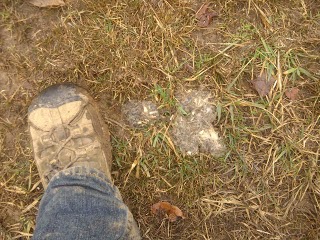
Possible coyote scat.  Loudoun County, VA.
Photo: Brian Balik

This lead me down the wrong direction though.
Here's why:

Coyote scat can look almost exactly like fox scat or raccoon scat, depending on the size of the coyote, the time of year, and the contents of the scat.  There is a big difference in these scats though, but for my projects, I didn't have the time to do this kind of survey.  Every time I would find scat, I would second guess myself, put out a camera anyway, and not get any pictures of coyotes.

Coyote tracks are so similar to dog tracks, that even the highest qualified biologists can sometimes not even tell if they are of coyote or a domestic dog (like Fido that lives in your house).  Many books will tell you that coyote tracks are a little thinner and "sharper" than dog tracks, but most of the tracks that I've seen of dogs can be of hundreds of shapes and sizes.  This is so incredibly subjective to how fast the dog was walking, dog breed, and the weight of that individual dog.

Possible coyote den.  Leesburg Virginia.  Photo: Brian Balik
Dens are tricky to survey, and although I've found a lot of "confirmed" coyote dens, most of them were not in use of the time of surveying.
So while most other professionals were telling me to look for these signs, then put out the trail cameras (camera-traps), I did the exact opposite.

The best way that I've ever tracked these animals was just to go out in the woods or fields, not specifically looking for any coyote activity at all.
Anywhere and everywhere, I figured I would do mouth calling, calling with reed coyote callers, and of course, my favorite, the camera-trap.

The results were phenomenal and to everyone's amazement, they have shown up.

A pair of coyotes.  Picture taken in Centreville, Virginia.  Photo:  Brian Balik
Fairfax County Coyote taken in the summer of 2013.  Photo:  Brian Balik


Fairfax County Coyote taken in the Summer of 2013 (2). Photo:  Brian Balik.

Now while you may enjoy photos like this, some people do not enjoy coyote sightings to any extent.  To some farmers (especially of chickens, ducks, geese, and goats) coyotes are not a welcomed sight.  One thing to realize about coyotes in Virginia is that they are considered a "nuisance species" by the Virginia Department of Game and Inland Fisheries.  Source: VDGIF-Coyotes .

People ask me all the time about this and why they are a nuisance species. I tell them that they could be considered this for a couple of reasons.  They eat livestock, eggs, grain, and food that some farmers depend on for their income and life.  More coyotes may mean more of a problem to a farm.

Coyotes were also never around northern Virginia until just recently.  An article from the Washington Post indicates that the first sighting ever of a coyote in Loudoun County was in 1992 (see link to access the archived Wash. Post article:  Washington Post: Coyote Article ). 

People seem astonished when they realize that coyotes were not naturally living here when Jamestown was settled or when George Washington lived in Mount Vernon.  They were fairly new to the area when Lorena Bobbit did, well, you know.

Whether you like them around or not, the Eastern Coyote calls northern Virginia its home.  I've found out that the best nights to go out and see one are near a full moon, when there's a little snow on the ground, and the temperatures are cold.

This way, the snow reflects the moonshine and you can see what is around.

To hear a coyote, get up really early or stay out around midnight in Loudoun or Fairfax.  Make a call with your voice that resembles a wolf-howling but a lot more high-pitched.  Even higher pitched than a beagle waiting for breakfast.

You may hear one or see one, and if you do, please let me know.  I'd love to add that coyote to my camera-trapping projects.

Thank you.

Monday, December 29, 2014

Fight! Fight! Fight!

Like two fat kids fighting over the last piece of pie, these two hawks were all about getting the last bite of a good meal.  This meal was that of a dead deer though, in Leesburg, VA.

The real point of putting the camera-trap over a deer body was to see if any coyotes were around.  They were not.

Black vultures, crows, ravens, and hawks filled up multiple SD cards here though with over 25,000 images taken over a period of three weeks.

Check out the hawk acrobatics below!


In usual "Brian Fashion" the time/date stamp was set incorrectly.

Tuesday, November 11, 2014

'Tis the Season

The fall rut has started in Fairfax and Loudoun Counties in Virginia.  What this means is that the deer are biologically ready to start mating and bucks are chasing does all day long.

What this also means is that deer are moving around a hell of a lot, and are getting creamed on the roads.  This deer was (at least I presume) hit by a car and dropped dead.  Of course I did the only thing I could think of, and put a camera-trap up to it.

Foxes, raccoons, and possums picked at it at night, and birds had their way with the meat during the day.

I really enjoy looking at images of hawks that scavenge on the dead deer, and was lucky enough to get images of them during this camera-trap stakeout.

Ignore those time/date stamps.  I forgot to set them correctly.

Enjoy!


Hawks can scavenge on carcasses during anytime of the year, but on my cameras, the show up a lot more on deer carcasses during the winter than on deer carcasses of the hot months.

'Tis the season for deer carcass cameras, birding, hunting, the deer rut, and winter sports.  We're in for it until April, folks.

Thursday, September 25, 2014

Alyssa's Alligator Video

Fellow wildlife blogger and camera-trap inspiration, Alyssa Johnson captured one amazing video a few days ago.

Whether it was being in the right place at the right time, her wildlife expertise, or just dumb luck, she captured a video of a domestic cat looking very curious towards a body of water.  An alligator jumps out of the water to attack the cat.

It's videos like this that inspired me to even getting into camera-trapping on a large-scale.

She calls it the "Best camera trap video of all time", and I can personally confirm that it is nothing less than that.

It's crazy.  Give her blog a view, give the video a view, and leave a comment.

See it here:   Alyssa's Alligator Video


All work, images, and video are of Alyssa Johnson.

Wednesday, September 24, 2014

"10 Point"

I commonly give nicknames to wildlife.  I've been told not to do this for the point of becoming attached to a specific individual and also because I'll most likely see their dead bodies splattered on the paved roads of Northern Virginia, but hey, nicknames make wildlife viewing a bit more exciting.

"White Legs", "Scarface",  and "1 Stripe" are just a few of the nicknames given to individual animals that either come up on trail cameras or are commonly seen by coworkers in my parks and wildlife jobs.

Here's another one for everyone that's been called  "10 Point".  10 Point is an impressive male, white-tailed deer.  It's easy to identify him because of his impressive rack that contains 10 tines.


Who knows whether or not he'll make it to the end of Northern Virginia's extensive hunting seasons.

Friday, September 19, 2014

Hummingbirds

Due to an incredible amount of camera-trap theft, I've lost an even more amount of data and images this year.  The thing is, is that hunting season has started in most of the counties where I camera-trap, and the woods have a whole different kind of visitor.  I've also taken a lot of cameras down to prevent them from getting stolen.

Don't worry though, I'm back to blogging right now and am carefully planning on where I am going to put out more cameras.

In the meantime, here are a few images of hummingbirds that were caught on a GoPro camera trap that I put up a few weeks ago.


I like the versatility of the GoPro cameras for my wildlife surveys and of course, just for fun.  I haven't perfected the quality control and everything of them yet, but I'm getting there.

Hopefully the next blog post will be of more camera-trap images.

Saturday, August 30, 2014

Flying Squirrel?

Some people are surprised to learn that Fairfax and Loudoun Counties are home to flying squirrels.  We have TONS of them around, but to see one, you have to be in the right place at the right time in the night. They are strictly nocturnal and should not show themselves often in the daytime.

I recently came upon this image while checking on of my camera-traps.  It's in Fairfax County, VA and the time and date stamp are correct.  The image below the one containing the mystery critter is a "blank" image that does not contain any animal.  This is included so you can better tell the parts of the animal awhile comparing it to the "blank" image.


What do you think?  Is that a flying squirrel that got a bit blurry?  Is it a moth, bat, insect on the lens, a leaf falling, or a bird?  I think I know what it is, but need some other opinions to convince me.


Monday, August 25, 2014

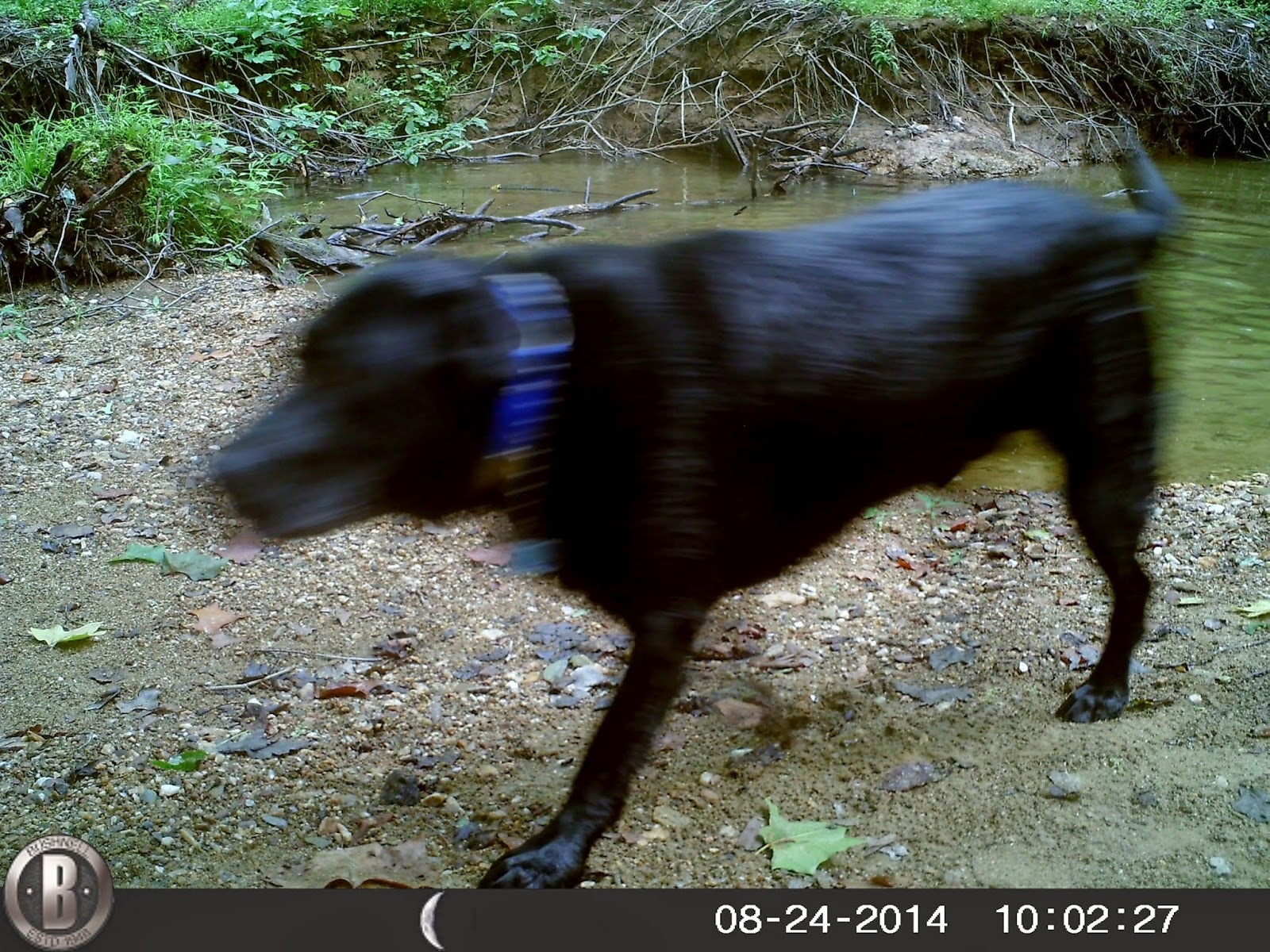
Woof Woof!

Clearly I underestimated the amount of human/dog activity at this place.


I was hoping that this camera would be safe from man and man's best friend, but boy was I surprised when an intern emailed me some pictures today.  The camera was in a protected nature preserve that I won't name (for now) well away from any trail.

It's time to move that camera!

Wednesday, July 9, 2014

The Ants Go Marching

A coworker helped me with some cameras today and found one completely covered in ants.

Upon closer inspection, ants had completely invaded the entire interior of the camera-trap.  We spent a good hour opening up the camera, unscrewing screws, cleaning it out, and putting it back together.

We completed our "Camera-Trap Surgery" in the field as we swatted away maybe 25 mosquitoes and picked off ticks of our legs.  The ants had made an entire food storage type of room in the camera along with an egg holding cell.  It was rough, but we managed to save the camera and found that no electrical components had been badly damaged.

We checked the SD card on a laptop in the field as well, but only found a few pictures of a red fox and raccoons.

But hey, you can't win with bears, coyotes, and other "crowd pleasers" every day.  It was still a good day out on the trails, and I thank him greatly for helping me today.

Thursday, July 3, 2014

Summer Fawn

Spring is done and summer is upon the people and wildlife of Virginia.  We've had a couple of really hot and humid days here already, and today wasn't much of an exception.

The heat has begun, and the white-tailed does are out in full force eating grasses in meadows and tomato plants in your suburban garden.  

That's alright though because the does are working hard to produce enough nourishment for the fawns that have recently been born.


Even though northern Virginia has a ridiculous amount of white-tailed deer, it still is always satisfying to see fawns growing up throughout the rest of the year.

Tuesday, July 1, 2014

No Surprise

Usually I have absolutely no idea what will be recorded on a camera-trap's SD card each time I check it, but sometimes I can tell exactly what will probably come up on some of the images.

This happens in the case of skunks.  Naturally, I have a very strong nose, which I consider to be a very good thing for working in parks and wildlife.  Skunks leave a trail of stink wherever they go and have gotten pretty darn good at tracking and trailing them.

I knew exactly what I was going to find on the camera's SD card this time, because as soon as I got close to the camera, I could smell the skunk spray from the previous night.

Here's a photo of the mini stinker.


Friday, May 9, 2014

Deer Carcassing

Dedicated blog readers should know that I love a good deer carcass- for camera-trapping purposes of course.

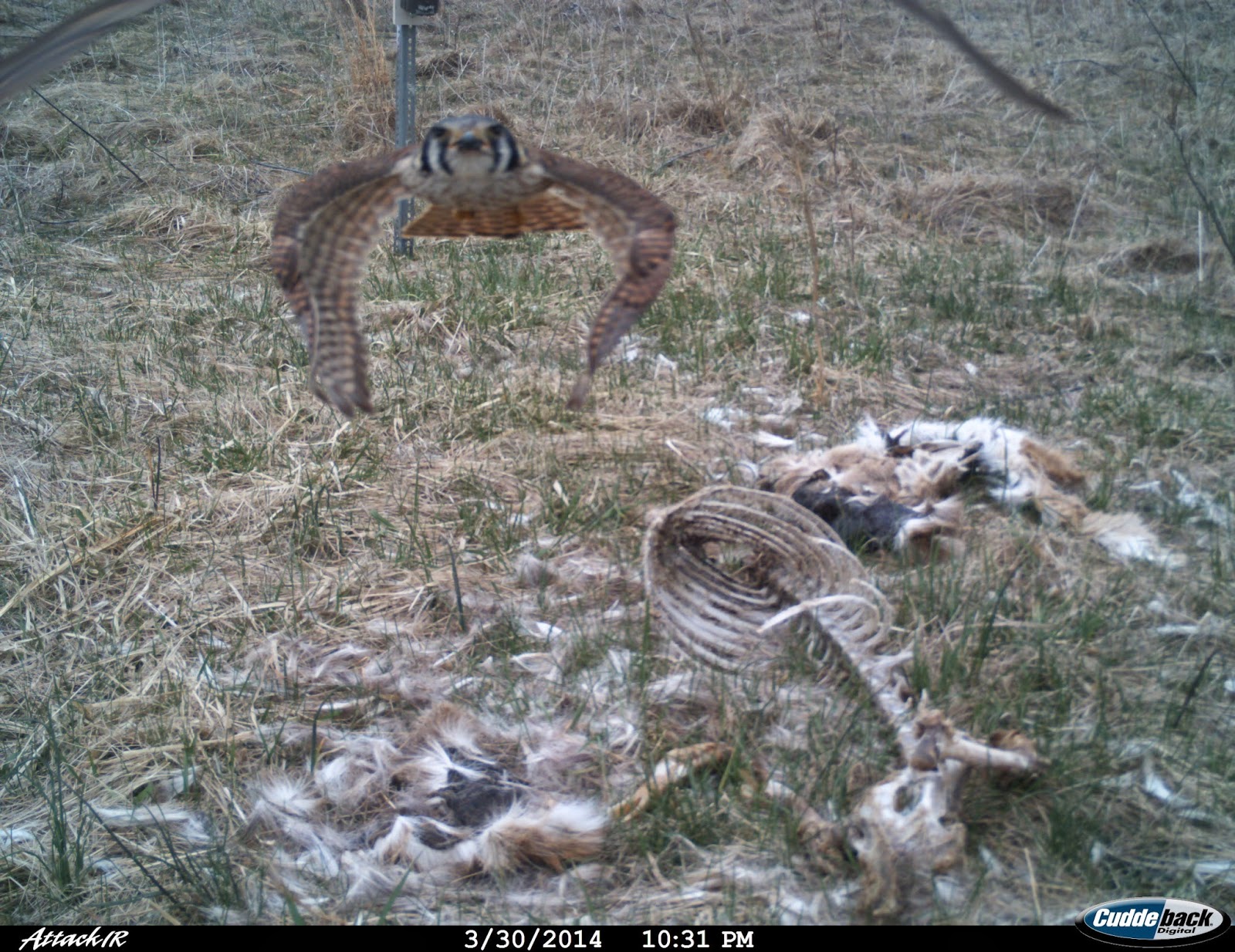
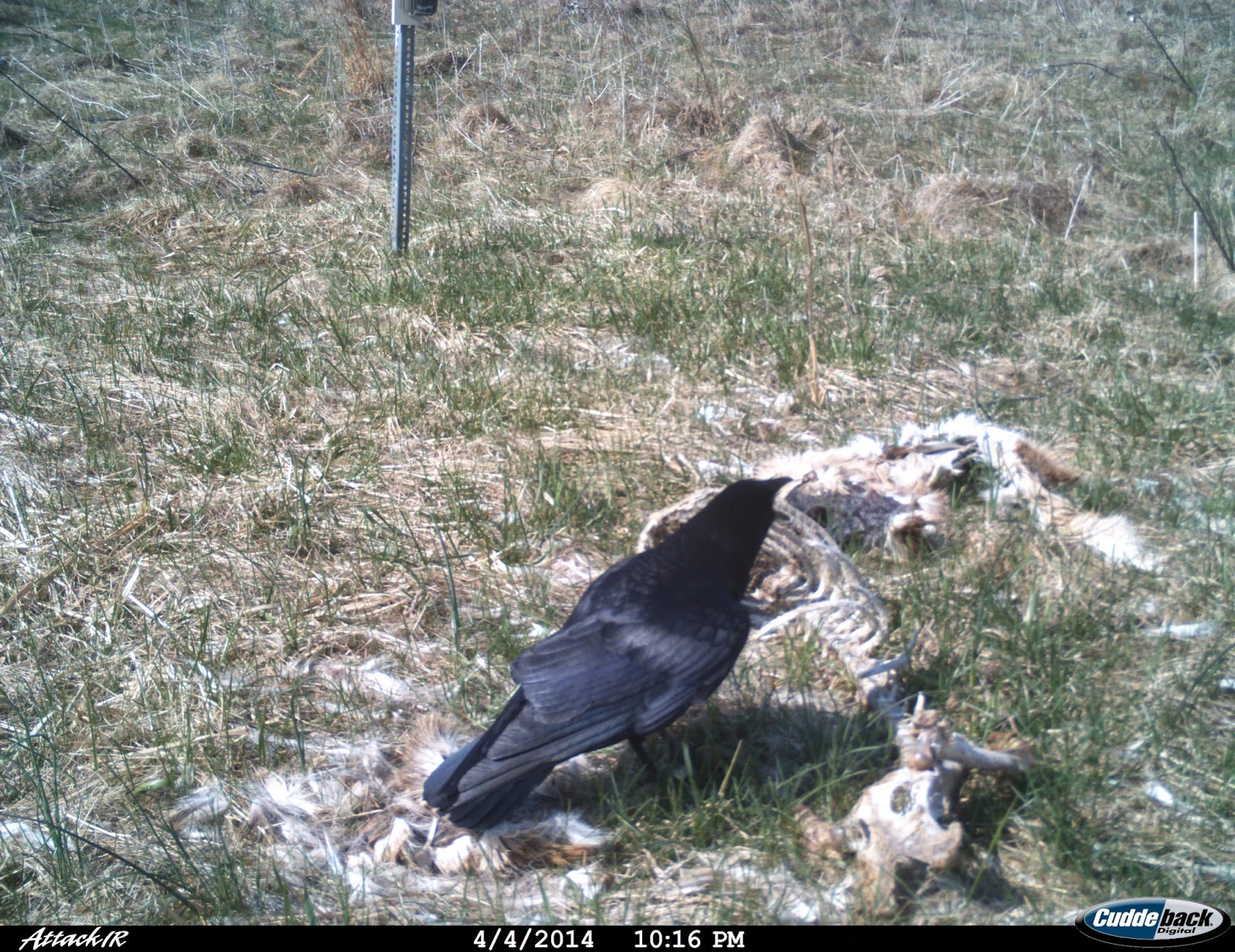
The deer carcass in Leesburg, VA has been out for months and is STILL getting amazing results from scavenging critters.   Here's a few photos from the last batch that you should see.

Crows, ravens, vultures, and american kestrels are gorging on not only the remains, but also on the beetles that are feasting on the deer.


Monday, April 28, 2014

Red Fox Irony

Ironic how a day after I write a post titled "Where are the fox kits?", I check a camera and get some decent pictures of fox kits.

These were taken in Great Falls, Virginia and seem to be the first time the kits have ever ventured outside their den.  There has been a camera here for about 2 weeks, but yesterday, the babies came out to enjoy some good weather.

The date/time stamp was set wrong (my fault, sorry fellow blog readers), but I can assure you that these were taken yesterday, April 27th, 2014.


These kits are red foxes but they don't look resemble their parents completely.  Through the next weeks and months, their fur will become more orange, their bodies will fill out, and the entire animal will become an efficient machine that excels at catching mice and voles.

These ones are no bigger around the size of my shoe (size 10 in case you were wondering).

Another camera was put up in the opposing direction of the den to get more photos.