Showing posts with label nature. Show all posts

Saturday, March 12, 2016

Amphibian High-5!

It's that time of year again!  Amphibians are crossing roads to go to their breeding pools.

This American toad wanted a high five, as I moved it to safety from a road to the side, in the direction it was travelling.

High-fived a toad a few days ago.  Photo: Brian Balik
I'll be counting amphibians again this year and assisting other researchers when I can.  We're getting ready for fox kit season soon, so look forward to some results and photos from that in the next few months.

Wednesday, October 21, 2015

Peace Like A River

Being a professional naturalist has given me the opportunities to either ride in or drive many kinds of vehicles.  I've been on ATV's, agency pick-up trucks equipped with infrared and night vision scopes, airplanes, motor boats, mountain bikes, John Deere gators, and even a helicopter.  These things make work in parks/wildlife easier, depending on where work needs to be done. Sometimes, not all wildlife is best enjoyed by a fast trail vehicle or the coolest aircraft.  Sometimes, it's all about something meaningful.

Potomac River sunrise
This past spring, I noticed a stretch of forest with bald eagle nests, a heron rookery, and a cormorant rookery. These rookeries are places where flocks of birds come to nest and congregate.   It just sounded like a little slice of wildlife watching heaven to me.  I had to get out there to see the birds and to try to photograph some of them.  The forest was only accessible by boat, and the boat I was dying to take out was in my backyard straddled upon a few sawhorses, on dry land.

The boat's name is Peace Like A River, and for the past 2 years, she had only touched a body of water a few times.  I wanted to change that. 

My desire to take her on the water increased when I was flipping through a small photo album of my grandfather's, from years ago.  This album was basically the story of how that canoe (and a few others) were built by him and of the adventures my mom and uncle had in those canoes, as children.  In between the pages of these photos are blueprints and plans that were used to construct Peace Like A River.  It doesn't seem easy to build one of these things, so it goes without saying that I'm thankful for having one so accessible to me.
Author's grandfather in Peace Like A River.
She's got an incredible amount of character in her wooden body.  She rides smooth, and although some maneuvers can be wobbly at times, she'll make every ride an enjoyable one.  It's even more enjoyable when you think about her history and character.


Author as a child (middle) with family on the Potomac River.
My siblings and I, as young kids, used to really enjoy going for rides in the boat.  My father would do most of the paddling work because as a kid, my main job used to be focused on not flipping the boat or leaning outside of it.  We'd fish from the canoe mostly, and often take breaks for lunch on the islands.  As I child, this was seen as an excuse to explore, an excuse that I still haven't let go of today as an adult.


As I was thinking of a plan to take the boat out and to see the bird rookeries, I figured I'd invite my friend Jeff.  He's a professional photographer with works and ties to National Geographic.  I found it fitting, as we try to find excuses to get out in our local parks anyway.  Plus, he takes amazing photos. He agreed and my excitement to go increased immensely. We paddled on the Potomac near where the birds were nesting.  We didn't disturb them at all, and Jeff got some really good photos of cormorants and herons. The "drop zone" of bird poop was quickly determined by us, so we knew to keep a bit of a distance from the animals.  The nests were probably between 40 and 70 feet in the air, and when a bird needed to poop, they didn't think twice about sending it straight down from that height.  It was an interesting experience, and I'll never forget the commotion of nesting cormorants and herons.

Cormorant rookery (nesting site).  Photo:  Jeff Mauritzen

Peace Like A River was originally a northerner, being built in New Jersey and taken out on bodies of water in Pennsylvania and New Jersey. 

She now resides in Virginia, and her most travelled body of water these days is the Potomac River, turning her into Southern Belle with northern roots.
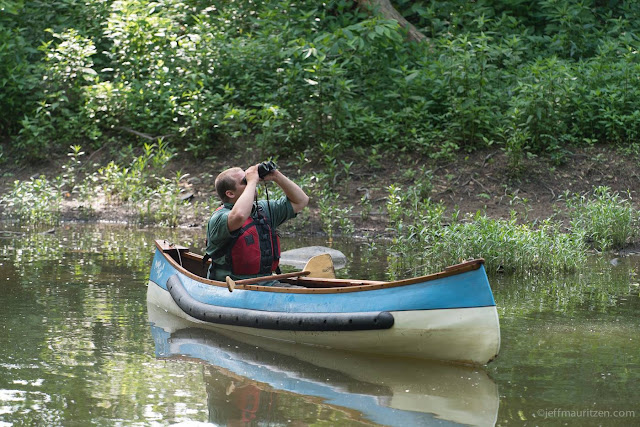
Brian Balik (author) in Peace Like A River, searching for birds.  Photo:  Jeff Mauritzen
 
-Big thanks to Jeff Mauritzen for taking amazing photos and coming along on my local excursions.  Click to see more of his work here:  Travel and Wildlife Photography .

Saturday, September 5, 2015

Venomous Snakes of Late Summer

It's been one good summer, and to make it even better, I've had TONS of great animal sightings in its last few weeks.

Among these are a few coyotes, some bobcats, lots of bears, and even venomous snakes.


I saw this Eastern Timber Rattlesnake in the Shenandoah mountains last weekend.  These ones will put a hurtin' on you if they bite you, but from the stories I've heard from this area, they will usually give you the rattle sound as a warning before they strike.  Who knows though?  I sure haven't bothered any enough to find out.

It was good to keep a safe distance and not touch it, even though it looked pretty dead to me.

This other one is a venomous copperhead from Fairfax County.  Copperheads are some of my favorite snakes, and though their bite can easily hospitalize a human adult, I still try to get a few pictures of both live and dead ones.

I tried to highlight and focus on both the interesting pattern on the copperhead, as well as the bright yellow-green tail.   That yellow tail is a good indicator that this one is a juvenile.

Juvenile copperheads almost always have this feature, and is used as a caudal lure, luring prey to them when they wiggle it back and forth.

They are fascinating.  Even if I try to get a few pictures of a live one, I always look directly at the animal and try not to disturb it.

I don't kill these snakes, as they are just part of the nature around here, plus they are almost always seen by me in protected natural areas.

Venomous snakes are not something that should be "fooled" with.  They can kill you.  Though it is rare in the area that this happens, it still is possible, and knowing what venomous snakes look like can be very helpful in places where they are commonly found (parks, river banks, rocky outcroppings, woodpiles).  These snakes should not be feared, but people should be aware of where they most likely are going to be, what to do if you get bit, and more importantly, to not pick them up.

Saturday, June 20, 2015

Watch Them Grow

Antlers are one of the most fascinating things to watch grow on camera traps.  Each week, the deciduous growths on white-tailed deer bucks get bigger and bigger, sometimes growing more points as the summer goes on.

My buddy Peter and I have been using camera traps recently to do a bit of a deer survey on his property in Loudoun County.  We'll be counting deer for at least the next few weeks, and hopefully we will capture a coyote or two on camera as well.


The antlers almost never look the same in spring as they do the following winter.  They just grow so fast, in all sorts of shapes and directions.  I'm fascinated by that.

Peter was really excited to get this buck on camera, as he is both an avid conservationist and a hunter.  If we keep recapturing the same individual, I hope to put a video compilation together of all the images, showing the growth of the antlers throughout the summer.


That's a bit far in advance though, and completely depends on this buck coming up at least once a week, but you never know what could happen.
We also captured a fawn (baby white-tailed deer) on camera a few times, though it has only been photogenic once or twice during the day.


Wednesday, April 29, 2015

Bluebells and Turkeys

While a lot of the camera traps I use are for scientific surveys and research, I do really enjoy the ones that I set aside for my own personal use.  It's good to take a break from regular work and data entry, and just get out in the woods for some good ol' camera trapping creativity.

That was the mentality recently, when I took friend, naturalist, and professional photographer, Jeff Mauritzen along on a hike and paddle.   Him and I have been working on a few projects with all kinds of camera trapping and local wildlife, so it was a great experience for both of us to meet up and get outside.

Author in Virginia bluebells.  Photo:  Jeff Mauritzen
The best part of the day was meandering around a carpet of bluebell flowers that sprawled all over a forest floor.  There were thousands of them!

It was a humbling experience; one that almost took my breath away with the sight of so many flowers.

We took some photographs, walked carefully, and of course, got to work on a camera trap set.

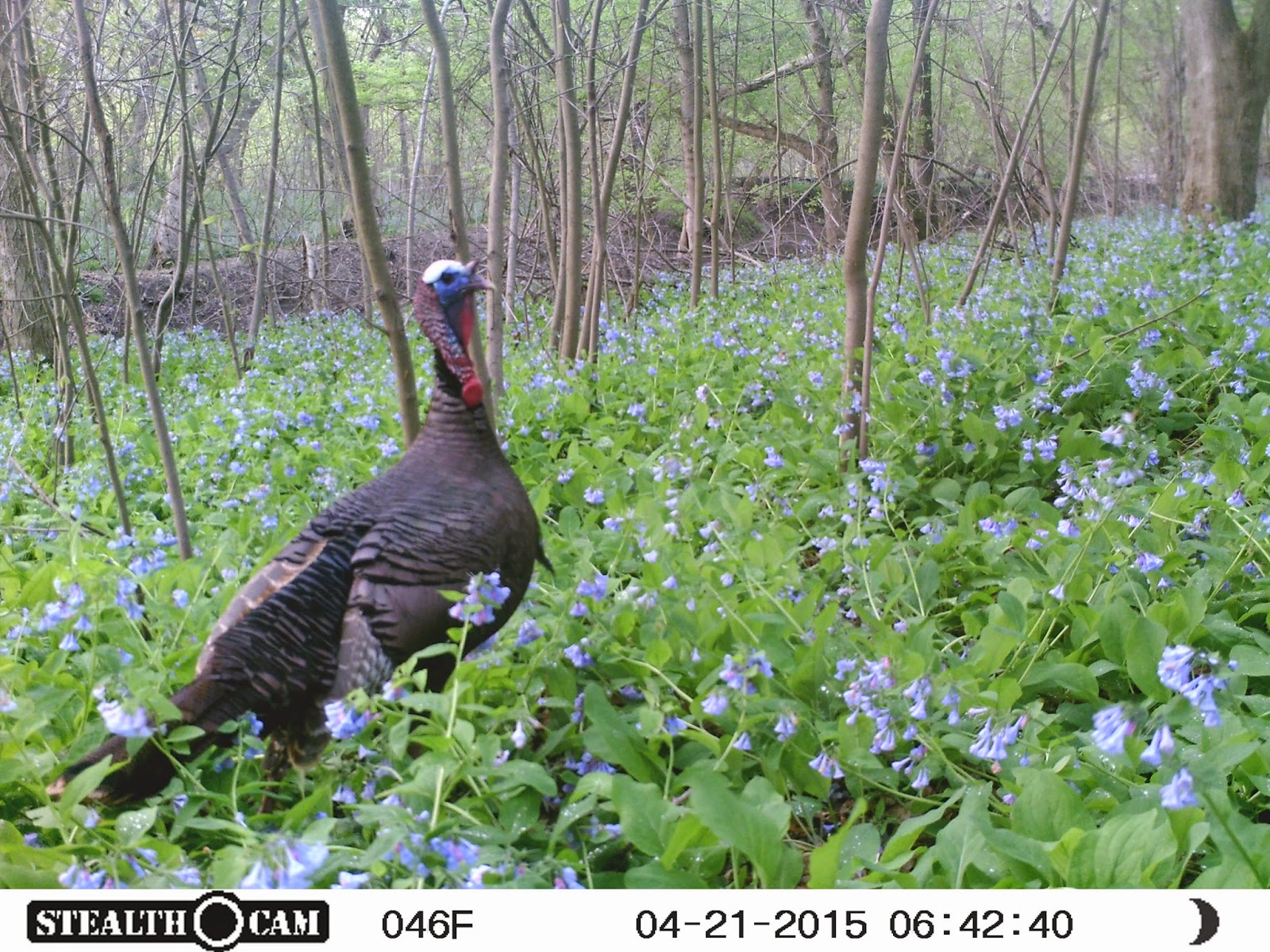
I already knew that no matter what animals we would capture on the camera trap, they would be beautified by being in a sea of bluebells, but was completely amazed when I got incredible pictures of wild turkeys.

One of the projects that Jeff and I have been working on is an article in National Wildlife Federation's Magazine, "National Wildlife".  We had an idea of a few camera trap setups to provide the magazine with photos, so it was really nice to get these turkeys in this setting.  I'm excited to get on board with this and hope to share even more photos of wild turkeys in an upcoming issue of the magazine.

For now, enjoy this picture of a turkey in the bluebells.

Wild turkeys are one of my favorite creatures to watch. Endless hours of entertainment can come out of sitting quietly where there is a turkey roost.  Turkeys fight with each other, putz around, and then go on "missions" to mate with each other.  As a naturalist, this is my television, as it's a wildlife version of the Kardashian's.

I did a little bit of a count and individualized multiple males (including two really beefy "Toms"), at least 7 hens, and also got a few pictures of white tailed deer.

The camera has since been taken down, and will be placed somewhere new.  What's next?

Follow along and find out!

-Big thanks to Jeff Mauritzen for taking amazing photos and coming along on my local excursions.  Click to see more of his work here:  Travel and Wildlife Photography .

Thursday, March 19, 2015

New Dens

Newly dug fox hole.
The better part of this afternoon was spent working and scouting locations for where I should put up camera traps next.

Through some dense brush and "the thick stuff", I stumbled across a new den site, of the fox variety.

One impressive entrance hole was made deep into the little berm where the dens were being made.  An exit hole was only just beginning though, and was no more than 3 days old.

Hopefully we'll be seeing some fox kits within the next two months.

Camera traps will tell us all this though, but for now, I'm going to stay away from this den so I do not disturb the animals that are building it.

Last year brought some incredible results from fox dens that not only helped estimate the canid population, but gave me a great opportunity to educate the public on what some cute northern Virginia baby foxes looked like.

See the link here to view some results from last year's red fox den and its activity:
Red Fox Kits 2014

There's no telling what will happen though.  Time will tell, and that is the beauty of all this.

Partially dug out exit or entrance hole to a new fox den.

Thursday, February 26, 2015

Tracking Wildlife Through Social Media

Facebook, Twitter, and all the rest of them have a place in the lives of everyone who uses them. From the completely addicted Facebook user, to the Weekend Twitter Warrior, everyone seems to be connected with them these days.  I was thinking about this a few days ago and was going through my head to classify myself or put myself under the category of some kind of social media demographic.

I never found out the real answer to my own question, but I did realize that my Facebook usage is unlike most people's.  I use Facebook and Twitter to track wildlife.  I do it all the time by just being connected.

Facebook has "Groups" and "Pages" for those of you who are unfamiliar with the website.  You can join these groups and see exactly what people post to the public.  Groups range from hobbyist groups, to family groups, and even classmates in a specific college class or study groups.  Pages are a bit different, but with a similar concept.  We'll leave pages for another day.

Black bear reported to the public on Facebook
What intrigues me though, are Facebook groups that cover people of a certain geographic area. Homeowners associations and neighborhood watch groups are a perfect place for a bit of interesting wildlife tracking.

People post all kinds of important information on the whereabouts of all sorts of species.  Most posts regarding wildlife have to do with what comes up to bird feeders, "too many deer", red fox appearances, and the occasional coyote post from around the area.  Once in a while black bears and bobcats are talked about, and very rarely, someone will post something about a mountain lion.

All of these sightings are important to me.  It helps me out with my trail camera surveys and gives me an opportunity to talk to private property owners about what is really around here.  What usually happens in situations where I see people posting about wildlife sightings, is that I will comment that I'm interested and take it from there.  Sometimes this leads to me trusting the people enough to get the chance at putting up a trail camera on  their property.

I find it fascinating to not only see what people see, but also to see what they completely miss.  It's incredible how many animals seem to "go under the radar" of lots of people.  I have known about bears, bobcats, and whole packs of coyotes that visit people's yards.  Some visit almost every single night, and people never even know.

A good way to skip through posts not having to deal with wildlife is to go on the specific Facebook group and hit the "search" bar up top.  I type in words such as "coyote", "bear", and "wildlife" and all kinds of stuff may come up.  This is usually done once a week on my areas' that I cover on wildlife sightings and trail cameras.  It is something that is free and doesn't take much time at all.  For those two reasons, it is well worth it for me to do this.

A large portion of the work I do covers sightings and opportunities that come directly from my bosses in the parks and wildlife careers.  Tracking wildlife through social media is an opportunity that takes me off the beaten path of professional animal sightings and is a whole "science" in itself.  It's amazing.

Sunday, August 3, 2014

Bird Banding and Weighing

Ever wonder how small birds are weighed?

If you have, then here is the answer.


They are placed upside down in small containers and put on a scale.  Looks kind of silly doesn't it?

It's just one of the things I learned in the past two weekends while meeting up with and helping out other naturalists who were banding birds.  I really learned a lot and appreciated everything.  Many birds were banded and data entry was recorded.

Here's a layout of the table and some gear we used.

Tomorrow, it's back to the river and more camera-trapping.

Tuesday, December 31, 2013

Wetland Paparazzi

There are multiple cameras placed in a small wetlands area in northern Virginia now.  I've had this place in mind for camera-traps for months, but just recently braved the wet conditions explore within it.

Under the 4-6 inches of standing water is another 6-inches of rotting swamp-like vegetation mixed with a thick mud.

Cattails are the dominating plants around here, and do not make for easy travelling.  They choke your view of what's ahead and spear their way up the back of your coat if you're not careful.  They're not all that sharp, but can be a real pain.

What's worse though, is the multi-flora rose at the edge of the wetlands. It pricks every inch of your jeans like a sharp Velcro and sometimes won't let go.

I doubt any other person has walked around in this spot recently.

There were a few spots with blown down cattails and mud where I was able to identify a few animal tracks.

Raccoons, deer, fox, and some kind of mustelid were present.

Cameras will be checked next week to hopefully see what kind of mustelid is travelling in this wetland.

Sunday, November 17, 2013

Beaver Signs

It was hard to miss these signs of beavers along the Potomac River.  I counted 65 trees in total that were chewed on or damaged by beavers.

The power of their jaws and durability of their teeth amaze me.


You better believe that I put up a camera near these trees.


Wednesday, July 10, 2013

Kayak Camera: Trip 3

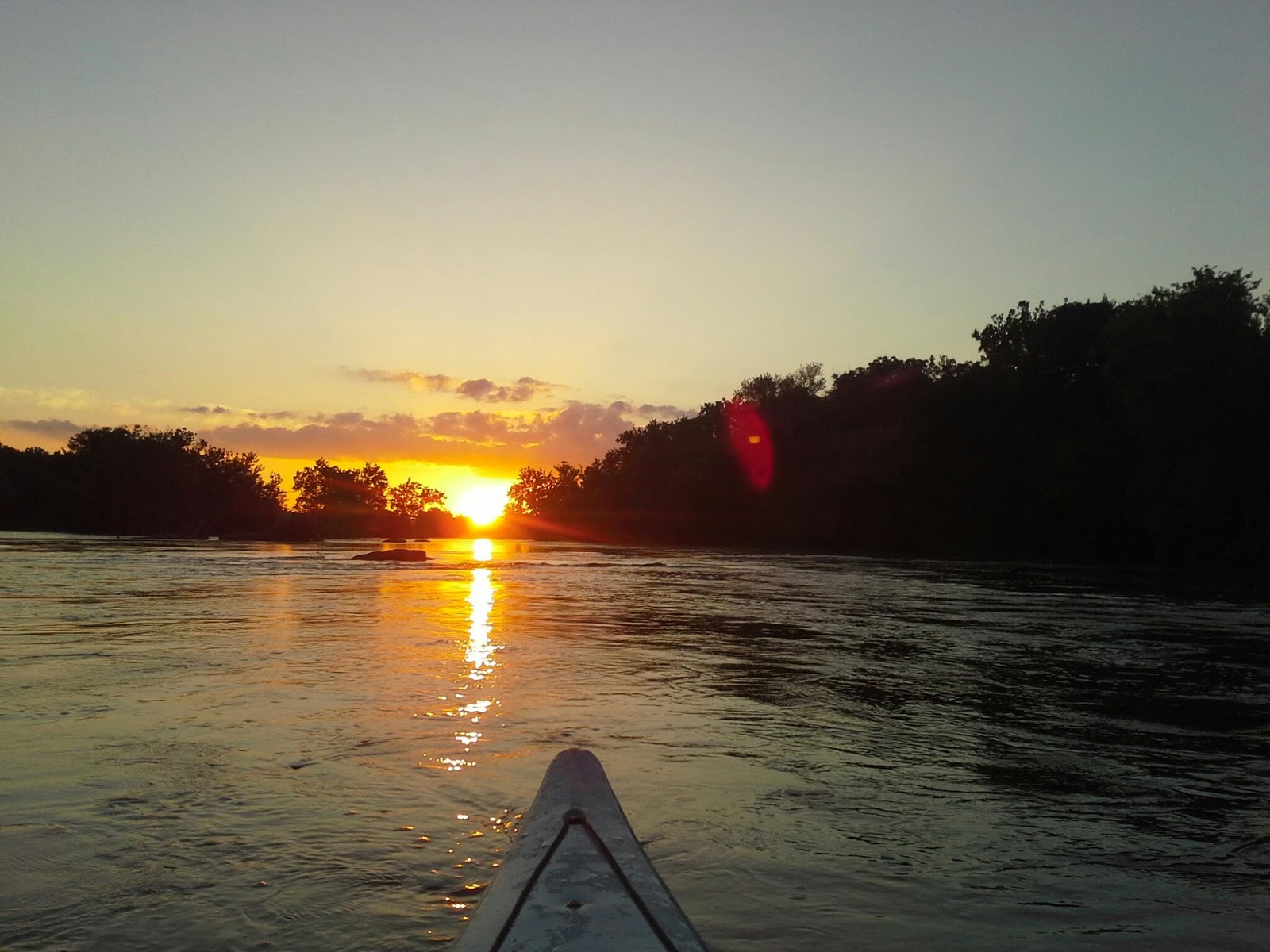
I scouted out some new camera-trap locations along the river today and found myself getting lost in this sunset while out on a kayak.
Few words are really necessary for this post.  Enjoy the pictures, folks.